

Translating Your Athletic Narrative into Business Accomplishments Using the STAR Method

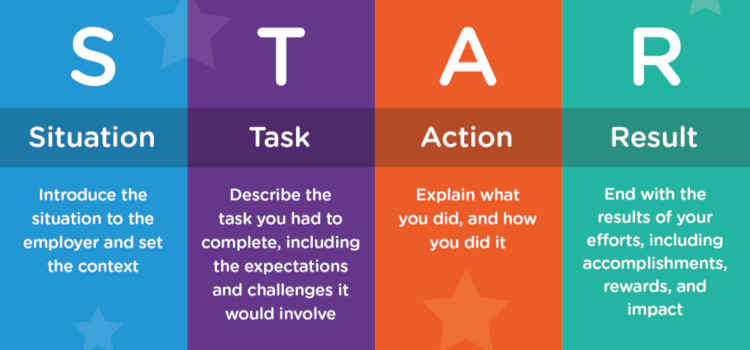
The most common mistake student-athletes make during job interviews and on resumes is presenting their athletic career as a list of achievements rather than a portfolio of professional skills. Recruiters understand that playing a college sport requires discipline, but they need concrete proof that those qualities translate into the business world. The solution is mastering the STAR method—Situation, Task, Action, Result—to transform generic athletic stories into measurable, quantifiable business accomplishments.
The STAR method provides a universal language for behavioral interviews, turning your past experiences into compelling evidence of future performance. For a student-athlete, the key is reframing common athletic challenges into business scenarios. The “Situation” should describe a complex organizational or competitive challenge, not just a personal struggle. The “Task” should articulate a measurable objective, not just a goal to “play better.” The “Action” must detail your specific, disciplined steps, demonstrating ownership and initiative. Finally, the “Result” must quantify the impact using data, metrics, or clear organizational outcomes.
For example, simply stating “I was the team captain” is weak. Using STAR, that leadership role becomes an exercise in organizational management and conflict resolution. Consider the scenario: your team was consistently incurring unnecessary penalties during the second half of games, leading to a 30% loss rate in close contests.
The STAR translation: Situation: “Our team faced a recurring pattern of critical, late-game penalties during the final quarter of conference play, which directly correlated with a 30% losing record in games decided by fewer than five points, signaling a breakdown in late-stage execution and discipline.” (This frames the challenge as a business problem: a process failure impacting results). Task: “As captain, my primary objective was to implement a new disciplinary and communication protocol to reduce late-game penalty minutes by 50% across the final six games of the season, thus improving our closing record.” (This establishes a clear, measurable KPI). Action: “I organized and led mandatory, coach-approved bi-weekly film sessions focused solely on late-game execution and emotional control under duress. I developed a ‘timeout communication script’ to standardize the messaging between the coaching staff and the players on the field, ensuring clarity despite high pressure. Furthermore, I mentored three underclassmen identified as high-penalty risks, integrating them directly into the strategy sessions.” (This demonstrates specific, active leadership, communication, and process design). Result: “Over the final six games, late-game penalty minutes were reduced by 62%, exceeding our goal. This tactical change contributed to the team winning four of the remaining five close contests, directly securing a spot in the post-season tournament and generating significant media exposure for the university.” (This provides quantifiable results tied directly to the action and links the outcome to an organizational benefit like revenue generation and strategic success).
Another powerful application of STAR is transforming the experience of managing a grueling competitive schedule. The business skill being demonstrated here is resource management, time allocation, and resilience under constant demand. The generic statement “I managed a tough schedule” becomes:
Situation: “During my junior year, I was managing a demanding 22-hour weekly practice schedule, a full course load culminating in a capstone project, and a 14-day travel rotation which created significant scheduling conflicts and threatened my ability to meet my semester GPA target of 3.5.” (This establishes the multi-faceted resource constraint). Task: “My goal was to maintain the 3.5 GPA while simultaneously fulfilling all athletic and academic obligations, requiring a complete overhaul of my time management system to ensure peak performance in both areas.” (A clear, dual-focus objective). Action: “I implemented a strict, calendar-blocked ‘time-box’ system, allocating fixed hours for practice, class, and study, eliminating all non-essential activity. I proactively utilized the Athletic Department’s academic resources to schedule all one-on-one sessions for the semester during the first two weeks of the year. Crucially, I negotiated with two professors to shift the submission deadlines for non-essential assignments to align with our travel schedule.” (This demonstrates proactive planning, negotiation, and disciplined execution of a personal system). Result: “I not only achieved a 3.7 GPA for the semester but also earned All-Conference honors, showcasing my ability to operate effectively and produce results under extreme, multi-variable pressure—a skill directly applicable to client management in a high-demand consulting role.” (The result quantifies both academic and athletic success, merging them into a single proof point of professional capability).
By using the STAR method, student-athletes effectively eliminate the ambiguity surrounding their soft skills. They move beyond simply listing “teamwork” and “discipline” and provide the compelling evidence of how those qualities manifest when confronted with real-world problems, making their athletic journey the ultimate case study in professional development.