

Beyond the Box Score: The Global Impact of Shooting Touch

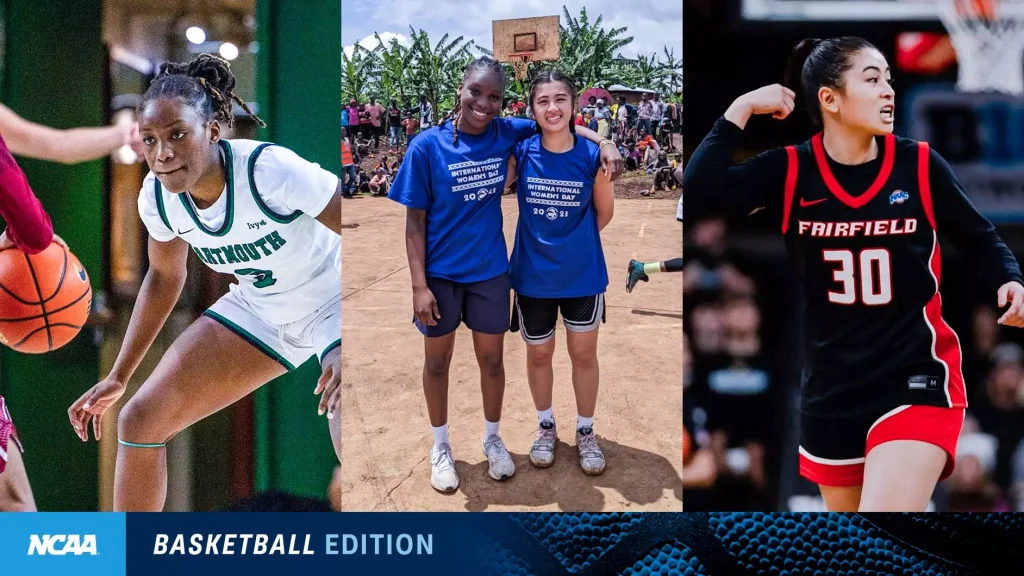
The basketball world is focused on the opening rounds of the NCAA tournament. While the headlines often center on bracket upsets and star statistics, a story emerging from Fairfield University highlights a different kind of victory: the power of “sport-for-development” to break socioeconomic barriers.
Christina Pham, a standout freshman for the Fairfield Stags, and Tahira Muhammad, a sophomore at Dartmouth, are living proof of how specific community-based interventions can alter the trajectory of a Student-Athlete.
1. Breaking the Pay-to-Play Barrier
The modern youth sports landscape is often criticized for becoming a “pay-to-play” system that excludes talented athletes from lower-income backgrounds. Shooting Touch, an international nonprofit based in Boston, was founded to combat this specific inequity.
- Boston Program: Serves over 500 girls, providing free access to mental, social, and physical health activities.
- AAU the Right Way: A elite five-team circuit that provides 60 girls with high-level competitive opportunities, travel, and gear—all fully funded by partners like the NBA Foundation and Converse.
- Economic Mobility: Beyond the court, Shooting Touch provides paid internships and job opportunities, allowing Student-Athletes to support themselves while pursuing an academic trajectory that leads to upward mobility.
“I was an unconfident, quiet Vietnamese girl from the projects… Shooting Touch allows inner-city girls and women facing gender-based inequity to have opportunities they would not otherwise have access to.” — Christina Pham, Fairfield Freshman
2. A Global Classroom: From Boston to Rwanda
Shooting Touch operates on a dual-continent mission, proving that the language of basketball is universal. In Eastern Rwanda, the organization serves over 3,000 girls and women, turning courts into clinics.
| Location | Impact Metric | Primary Focus |
| Boston, USA | 500+ Girls served annually | Socioeconomic equity and college recruitment pathways. |
| Eastern Rwanda | 3,000+ Girls/Women served | Health clinics, disease prevention, and gender-based empowerment. |
| Fellowship | 1-Year service terms | Sending former college players to Rwanda to coach and build infrastructure. |
Pham and Muhammad both traveled to Rwanda during their high school years, marching for women’s empowerment on International Women’s Day. This global perspective helped them develop the “Cognitive Flexibility” and “Cultural Competency” that recruiters in the 2026 professional market highly value.
3. The Tournament Stage: Fairfield vs. Notre Dame
As an 11-seed, Fairfield enters the 2026 NCAA tournament for the fourth time in five years. For Pham, this game is a culmination of a journey that began in the seventh grade.
- The Stags’ Momentum: Fairfield enters as a seasoned tournament team, relying on the chemistry and “sisterhood” that Pham credits to her early days in the Shooting Touch AAU program.
- The “Chip on the Shoulder”: Pham notes that the confidence gained from navigating inner-city life and global service trips provided the tools to succeed at the Division I level.
4. Career Takeaway: The “Social Capital” Dividend
Recruiters in 2026 are increasingly looking for Student-Athletes who understand Stakeholder Management and Social Impact. Pham and Muhammad are not just basketball players; they are “Ambassadors of Change” who can speak to:
- Navigating Socioeconomic Disparity: Proving resilience in the face of limited resources.
- Global Collaboration: Demonstrating the ability to work across cultures in high-stress environments.
- Community Advocacy: Showing a commitment to giving back, a trait that aligns with 2026 Corporate Social Responsibility (CSR) goals.
Sports as the Great Equalizer
The Shooting Touch story reminds us that sport is only an equalizer when the entryway is open to everyone. By removing the roadblocks of cost and geography, programs like this ensure that talent—not bank accounts—determines who gets to play on the biggest stages.
Responses