

The End of an Era: Steve Shaw to Retire as National Coordinator of Officials

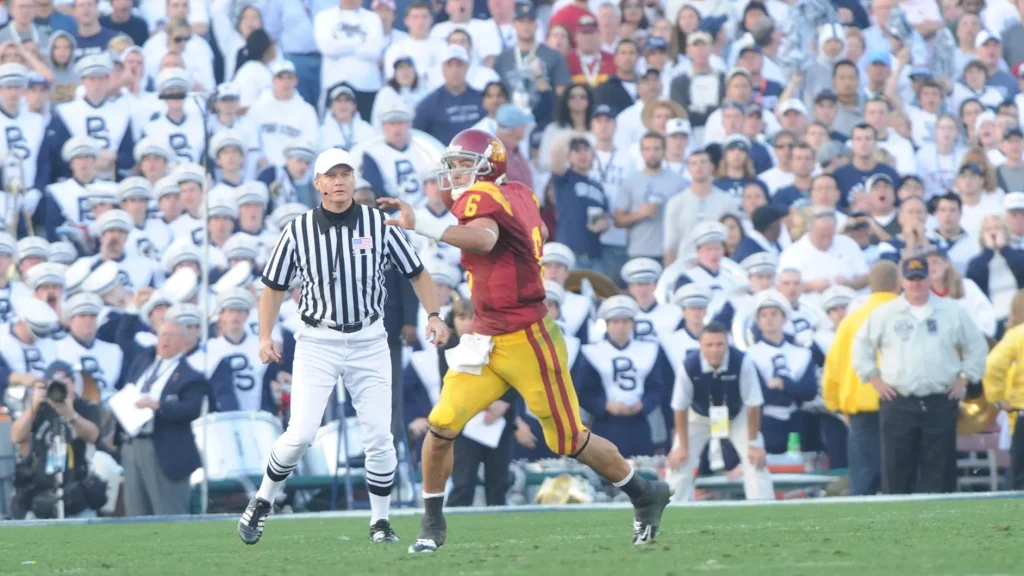
The landscape of college football officiating will undergo a major leadership transition this fall as Steve Shaw, the NCAA secretary-rules editor and national coordinator of officials, announced his retirement effective September 1, 2026. Shaw has been a pillar of the sport for decades, serving as the primary architect of competition rules and a tireless advocate for transparency in officiating. His departure marks the end of a transformative nine-year tenure as secretary-rules editor and a six-year run as national coordinator, positions in which he modernized the technical mechanics and public understanding of the game.
http://googleusercontent.com/image_collection/image_retrieval/18131201487208882661_0
Shaw’s career is a masterclass in professional evolution, moving from a highly decorated on-field official to a visionary administrative leader. During his 22 years as a referee, including 15 years in the SEC, he officiated some of the most iconic matchups in history, such as the 2000 and 2005 BCS championship games. His commitment to excellence and integrity followed him into his national roles, where he pioneered the use of video for official development and introduced the wireless crew communications system that is now standard across the Football Bowl Subdivision. For the student-athlete, Shaw’s work ensured that the rules remained consistent and fair, protecting the integrity of the masterpiece that occurs between the lines.
Beyond the technical mechanics, Shaw was instrumental in rewriting the Collegiate Commissioners Association manual and introducing eight-man officiating crews to accommodate the increasing speed of the modern game. His focus on communication through weekly video productions helped the general public and media better understand the complexities of officiating, bridging the gap between the field and the fans. As he prepares for his final season through the summer of 2026, the college football community celebrates his legacy of technical mastery and relational stewardship. Steve Shaw didn’t just call the games; he helped build the framework that allowed the sport to flourish in a high-velocity era.
Leadership and Legacy: Navigating Change in Officiating
The retirement of Steve Shaw provides a significant moment for reflecting on the importance of institutional stability and visionary leadership in collegiate sports. In his dual roles, Shaw acted as the ultimate strategic anchor, balancing the need for competitive evolution with the preservation of traditional standards. His tenure was defined by a shift toward technological integration, where he recognized that the future of officiating lay in advanced video evaluation and better on-field communication. This forward-thinking approach is a hallmark of the professional maturity required to lead at the absolute summit of NCAA governance.
The challenge for Shaw’s successor will be to maintain the level of transparency and consistency that has become his benchmark standard. As the 2026 season approaches, the officiating community is tasked with continuing the modernization of mechanics that Shaw began. His work in integrating eight-, seven-, and six-man mechanics into a single unified manual was an exercise in operational excellence, reducing confusion and ensuring that every crew, regardless of size, operated under the same principles of accuracy and accountability. For the student-athlete, this consistency provides the emotional safety net needed to compete at the highest level without fearing the suddenness of an unclarified rule.
Furthermore, Shaw’s career highlights the value of deep industry experience in administrative roles. Having spent years in the fire of SEC championship games and Rose Bowls, he possessed the relational capital needed to work effectively with commissioners, coaches, and players. This ability to facilitate dialogue and navigate complex challenges is a primary professional asset for any leader in the collegiate space. As the sports world moves toward a more data-driven future, Shaw’s legacy remains a reminder that at the core of every masterpiece is a commitment to integrity and the selfless service of the game.
Technical Mastery: The Innovation of the Officiating Manual
One of Steve Shaw’s most enduring contributions to collegiate football is his complete overhaul of the national officiating mechanics. By chairing the Collegiate Commissioners Association National Mechanics Committee, Shaw led a collaborative partnership that completely rewrote the manual used by officials across the country. This project was more than just an update; it was a fundamental reorganization designed to bring the sport into the 21st century. By repurposing the manual to include multiple crew sizes and pioneering new positions for eight-man crews, Shaw ensured that officiating could keep pace with the high-velocity offenses and technical precision of 2026 student-athletes.
This innovation was also fueled by a commitment to physical and cognitive stewardship. Shaw recognized that better technology, such as wireless communication systems, reduced the mental load on officials and allowed them to make split-second decisions with greater accuracy. This focus on information equity—ensuring that all officials had access to the best tools and training—is a masterclass in resource optimization. It allowed officiating to move from a purely reactive discipline to a more proactive and analytical framework, where video reviews and weekly evaluations became the standard for professional development.
As the 2026 season begins under a new national coordinator, the “Shaw Standard” of technical mastery will remain the guiding light for officiating crews everywhere. His ability to synthesize complex rules into a clear and actionable manual is a blueprint for effective leadership in any high-stakes environment. For the student-athlete, this means that their performance peak is supported by a system that is as rigorous and disciplined as their own training. Steve Shaw’s work on the manual is a permanent pillar of his legacy, proving that even the most complex masterpiece requires a carefully constructed and well-communicated plan to succeed.
The Global Brand: Officiating as a Public Narrative
During his time as national coordinator, Steve Shaw transformed the way the general public interacts with the rules of college football. Recognizing that confusion over officiating can impact the social capital of the sport, he utilized weekly video productions and frequent media engagement to demystify the most complex aspects of the game. This shift toward a more public-facing narrative was an exercise in relational leadership, as he sought to build trust and transparency with fans, media, and players alike. By humanizing the officials and explaining the “why” behind every call, Shaw helped preserve the masterpiece that occurs on the field.
This commitment to transparency also served as a form of risk management for the NCAA. In an era where every call is scrutinized on social media and replayed in high-definition, having a national coordinator who could provide a steady hand and a clear explanation was vital for the brand integrity of the association. Shaw’s ability to remain calm and analytical in the face of controversy provided a model of poise that resonated throughout the collegiate landscape. He understood that the reputation of officiating is tied directly to the public’s belief in its integrity and technical mastery.
As he prepares to retire on September 1, 2026, the sports world looks back on a career that was as expansive as it was disciplined. From the SEC to the national office, Steve Shaw showed that a commitment to service and excellence can leave a permanent mark on a sport. His work ensured that the collegiate game remained a unique and valuable launchpad for athletes and officials alike. While he may be starting a new chapter, his influence will be felt in every stadium and in every whistle for years to come. He has shown that true leadership is about building a foundation that lasts, ensuring that the game remains a masterpiece for the next generation.
Responses