

Four on the Floor: The 2026 Gymnastics National Championship Field is Set

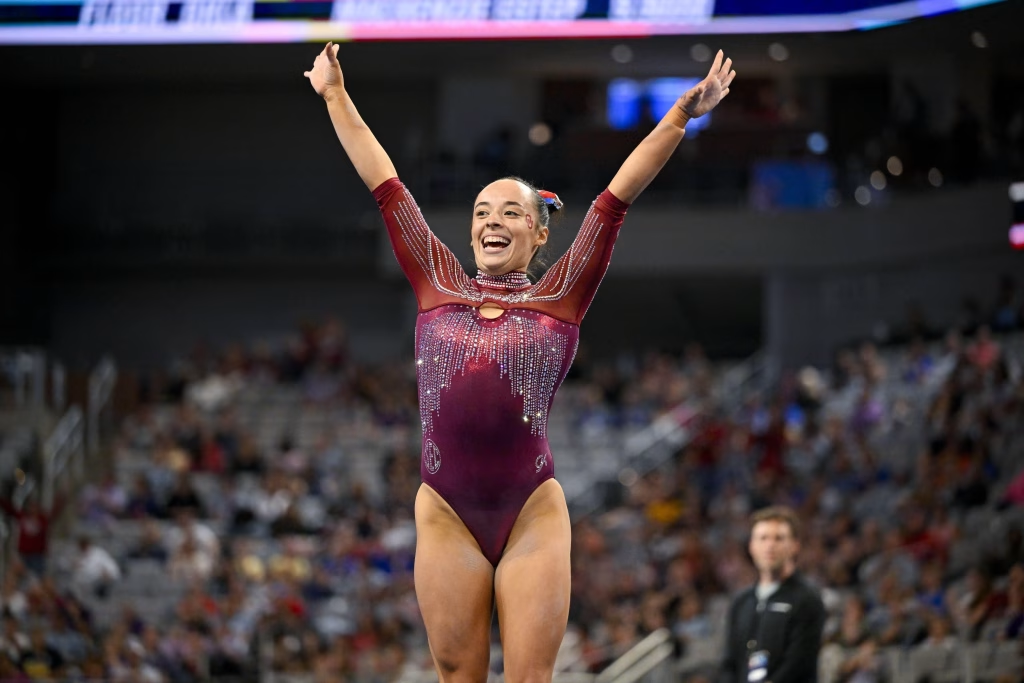
The road to the 2026 NCAA women’s gymnastics national title reached a fever pitch in Fort Worth, Texas, on Thursday as the “Four on the Floor” were officially decided. Following two electric semifinal sessions at Dickies Arena, the top-ranked Oklahoma Sooners, Florida Gators, LSU Tigers, and the history-making Minnesota Golden Gophers secured their spots in Saturday’s championship final. These four programs, which combine for eleven previous national titles, represent the absolute pinnacle of technical mastery and competitive resilience in the sport today.
Oklahoma entered the night as the heavy favorite and did not disappoint, posting a commanding 198.3000 to win Session II. The Sooners’ performance was a masterclass in operational excellence, headlined by Keira Wells claiming the individual vault title with a 9.9750. However, the story of the session was the emergence of Minnesota. Entering as the No. 13 seed, the Golden Gophers stunned the field by edging out UCLA for the second qualifying spot. Their 197.4625 total makes them the lowest seed to reach the national final since seeding began in 2014, a historic feat powered by Brooklyn Rowray’s session-best beam routine and Lacie Saltzmann’s clutch career-high on bars.
Individual Champions Crowned
While the team race was the primary focus, Thursday also saw several student-athletes reach the absolute summit of individual achievement. Faith Torrez of Oklahoma claimed the 2026 all-around crown in dramatic fashion. After teammate Addison Fatta was sidelined from all-around contention due to injury, Torrez stepped into the role and posted consistent brilliance across all four events to win the title.
| Event | Champion | Team | Score |
| All-Around | Faith Torrez | Oklahoma | 39.7875 |
| Vault | Keira Wells | Oklahoma | 9.9750 |
| Bars | Riley McCusker | Florida | 9.9875 |
| Beam | Brooklyn Rowray | Minnesota | 9.9625 |
| Floor | Jordan Chiles | UCLA | 9.9750 |
Professional Dividend: Resilience and The “Next Up” Mentality
The individual success of Oklahoma’s Faith Torrez provides a significant case study in professional readiness and resilience literacy. Stepping into the all-around spot on short notice after Addison Fatta’s injury required a high level of cognitive endurance and emotional regulation. In the 2026 sports economy, this “Next Up” mentality is a premier asset. For the student-athlete, the ability to deliver a championship-winning performance under sudden pressure is a powerful narrative for their professional brand, demonstrating that they are a blue-chip contributor who can solve complex problems with a calm mind.
This year’s semifinals also highlighted the narrowing gap between the perennial heavyweights and rising programs. Minnesota’s historic run as a No. 13 seed is a testament to their collaborative intelligence and strategic peak performance. By executing a “Stick-U-Mah” strategy on the bars in the final rotation, the Gophers proved that iterative growth and technical precision can overcome higher-seeded rosters. This lesson in competitive adaptability is highly transferable to the modern workforce, where underdog teams often disrupt established industries through sheer discipline and collective effort.
The Perfectionist’s Dilemma: Balancing Mental Health in the National Finals
As the four remaining teams prepare for the high-velocity environment of Saturday’s final, the pressure for perfection remains the primary psychological hurdle. The difference between a national title and a runner-up finish often comes down to a single tenth of a point, a reality that can lead to significant mental fatigue and burnout. Programs like Florida and LSU have navigated this season by prioritizing holistic well-being and recovery literacy, ensuring that their athletes are mentally fresh for the “Four on the Floor” finale.
For the student-athlete, maintaining a healthy perspective amidst the intense scrutiny of a national television broadcast on ABC is a form of social stewardship. They are not just competitors; they are ambassadors for a sport that demands the highest levels of physical stewardship and academic integrity. By finding joy in the journey and supporting their teammates through the inevitable wobbles and stuck landings, they are building a professional foundation of relational leadership that will sustain them long after their collegiate eligibility ends. The 2026 championship is more than a trophy; it is a validation of the integrity and grit required to reach the summit.
Responses