

From Bowdoin to the Podium: How NCAA Skiing Defined Jake Adicoff’s Paralympic “Why”

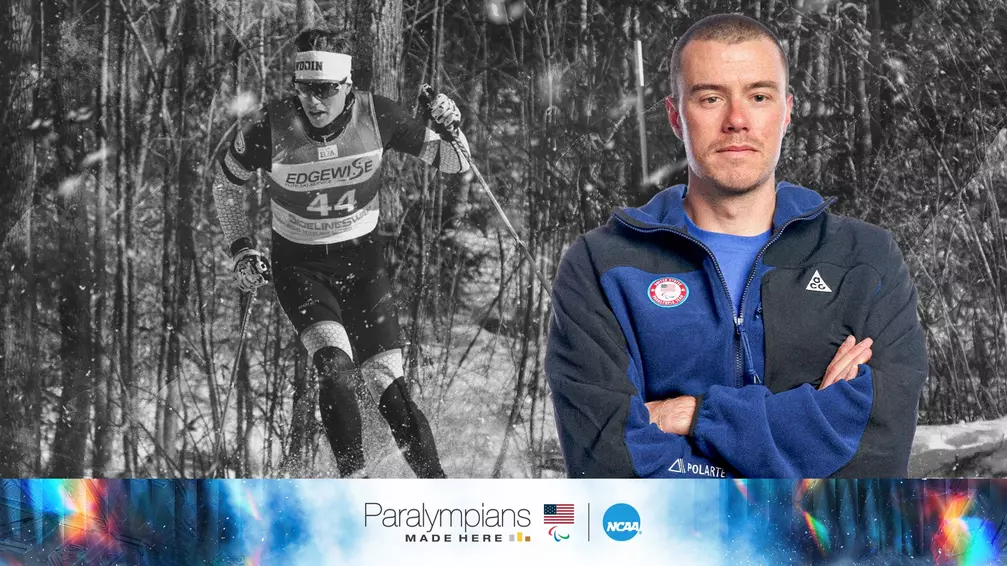
For three-time Paralympic medalist Jake Adicoff, the journey to becoming one of the world’s premier visually impaired cross-country skiers wasn’t a solo sprint. It was forged in the team-oriented, high-pressure environment of the Eastern Intercollegiate Ski Association (EISA) at Bowdoin College. While many athletes view their collegiate years as a stepping stone, Adicoff credits his time as a Polar Bear for solidifying his “why”—the realization that the people surrounding the race are just as important as the result.
As he prepares for the 2026 Milan Cortina Paralympics, Adicoff’s story highlights a unique intersection of NCAA development and elite para-athletic performance.
The NCAA Crucible: Sharpening the “Disadvantaged” Competitor
At Bowdoin, Adicoff chose to step away from full-time para-competition to race against able-bodied athletes on the EISA circuit. This period of “general development” was critical for his technical growth and mental resilience.
- Accepting the Gap: Adicoff navigated high-speed courses with limited vision, often competing against skiers with a physiological sight advantage. This taught him to “take a deep breath” and focus on his personal best rather than external disadvantages.
- The Joy of the Grind: The shared daily training sessions and the unique team-scoring atmosphere of the NCAA provided a “high-water mark” for Adicoff, proving that a motivated community is the ultimate performance enhancer.
- Academic Integration: While honing his elite skiing form, Adicoff balanced the rigors of a Math and Computer Science major, graduating in 2018—the same year he earned his first Paralympic silver medal.
The Guide Connection: A Network of Former NCAA Talent
In visually impaired skiing, the relationship between the athlete and their guide is built on absolute trust and communication. Interestingly, Adicoff’s current guides for the 2026 Games are themselves products of the NCAA system:
- Peter Wolter: A two-time NCAA All-American from Middlebury College (2018–2022).
- Reid Goble: A standout competitor from Michigan Tech (2020–2021).
Because para-guides must be fast enough to stay ahead of world-class racers, the selection pool often narrows to the top 20–30 skiers in the country. The fact that Adicoff relies on former NCAA competitors underscores the high level of talent the collegiate system produces and its vital role in the U.S. Paralympic pipeline.
The Professional Translation: Resilience by the Numbers
Adicoff’s career is a masterclass in Operational Excellence and Strategic Trust. His Gold-medal performance at the Beijing 2022 Games—where he erased a 30.7-second deficit in the anchor leg—is a direct result of the grit developed at Bowdoin.
| Milestone | Achievement | Collegiate Root |
| 2014 Sochi | First Paralympic Appearance | High school Nordic development |
| 2018 Pyeongchang | Silver Medal (10k Classical) | Bowdoin Senior Year / Academic Discipline |
| 2022 Beijing | Gold Medal (4×2.5k Relay) | Team-first mentality forged in EISA |
| 2026 Milan Cortina | Pursuing Individual Gold | Utilizing NCAA-trained guides |
“Never Shy Away”
Jake Adicoff’s message to the next generation is clear: the joy of the sporting experience should be open to everyone, regardless of disability. By leaning into the challenges of the NCAA circuit, he didn’t just become a faster skier; he became a more resilient professional. As he hunts for his first individual gold medal in Milan Cortina, he carries with him the community-driven purpose he discovered on the snowy trails of Maine.
Responses